

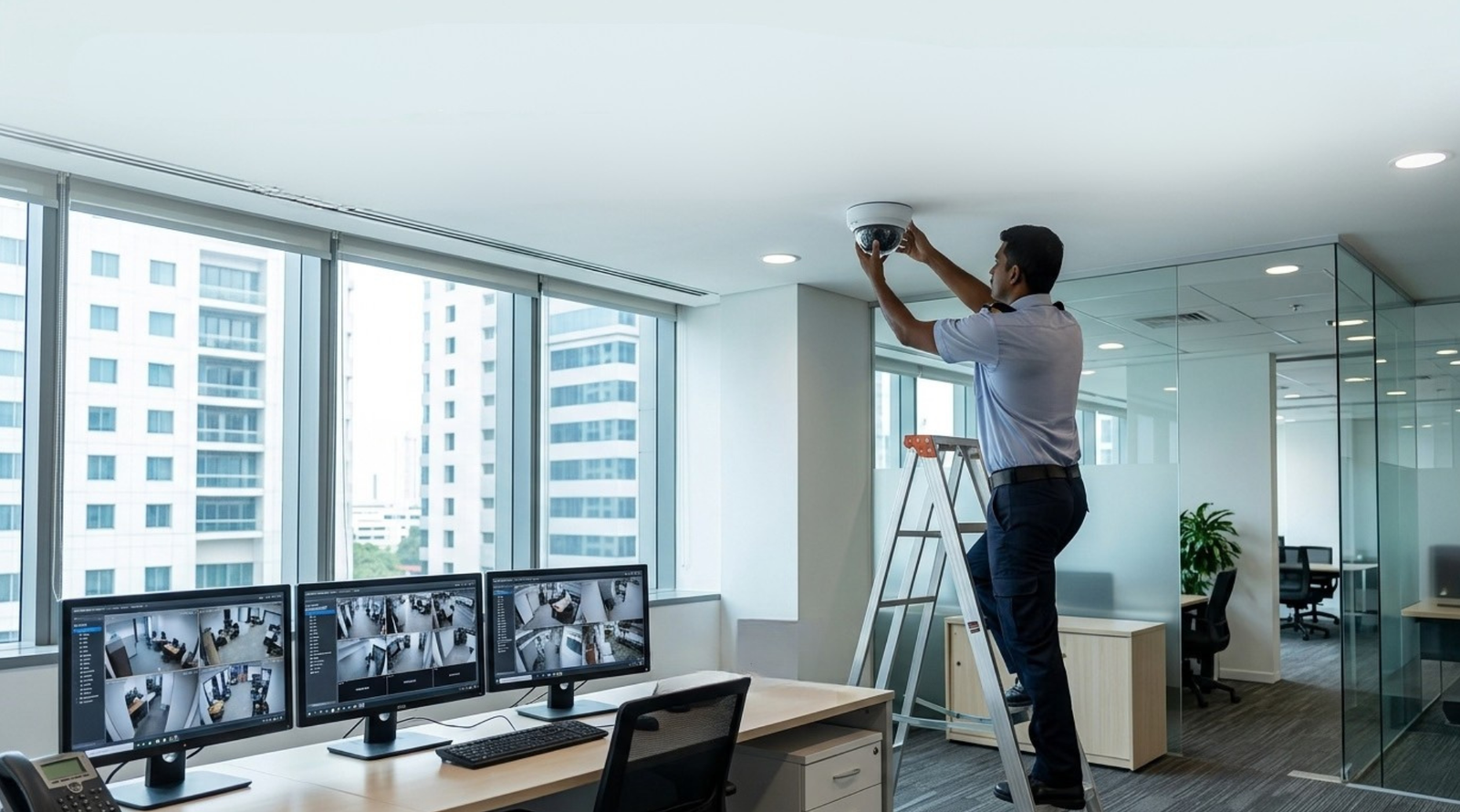
Businesses face a range of security challenges, from unauthorized access and theft to property damage and safety incidents. A well-planned CCTV security system can help businesses monitor their premises, improve visibility and support a more effective security strategy.
For offices, factories, warehouses, retail outlets and other commercial properties, CCTV Security Systems are an important part today. They help deter crime, support incident reviews, and protect people and assets across diverse sites and operations today. This strengthens overall safety strategies for tenants and staff.
However, choosing the right system involves more than simply installing cameras around a building. Careful assessment of site needs, integration options, and ongoing support ensures a suitable solution. This approach aligns with best practices across industries for diverse properties worldwide.
What Are CCTV Security Systems?
Closed-circuit television (CCTV) security systems use cameras to capture video footage from selected areas of a property. The footage can be recorded, stored and reviewed when necessary. Depending on the system, authorized users may also be able to view cameras remotely.
A business CCTV system may include cameras, recording equipment, storage, monitors, network connections and software for viewing or managing footage.
The right combination depends on the size of the premises, the level of risk, the areas requiring coverage and the business’s operational requirements.
Why Do Businesses Need CCTV Security Systems?
1. Improve visibility across the premises
CCTV cameras help security personnel and management observe important areas, including entrances, reception areas, loading bays, corridors, parking areas and restricted zones.
This can be particularly useful in large commercial or industrial facilities where it may not be possible to observe every area physically at all times.
2. Deter unauthorized activity
Visible security cameras can discourage some forms of theft, vandalism and unauthorized access. Cameras should not be treated as a complete security solution, but they can contribute to a broader system of physical security, access control and monitoring.
3. Support incident investigations
Recorded footage may help businesses review what happened during a security incident. It can provide useful information about the timing of an event, movement around a location and activity in monitored areas.
Businesses should establish appropriate footage-retention and access procedures to ensure recordings are handled responsibly.
4. Support security operations
CCTV can help security personnel monitor activity and identify situations that may require attention. When integrated with other security technologies, cameras can contribute to a more coordinated approach to protecting a property.
What Should Businesses Consider Before Installing CCTV?
Property layout and risk areas
The first step is to identify the areas that require monitoring. These may include:
- Main entrances and exits
- Reception and visitor areas
- Storage and warehouse spaces
- Loading and unloading zones
- Parking areas
- Perimeter access points
- Restricted-access rooms
The layout of the property and the activities taking place there should guide camera placement.
Camera type and image quality
Different environments may require different camera capabilities. Businesses should consider lighting conditions, viewing distance, indoor or outdoor installation, weather exposure and the level of detail required.
For example, a camera covering a wide entrance may have different requirements from one intended to capture activity at a specific access point.
Recording and storage
Businesses should determine how footage will be recorded and stored. Factors include the number of cameras, recording quality, retention period, available storage and how authorized staff will access recordings. Storage requirements should be planned according to business needs and applicable privacy and data-handling obligations.
Remote viewing
Some CCTV systems allow authorized users to view footage remotely. This can help business owners and security teams maintain awareness of monitored locations when they are away from the premises. Remote access should be configured securely, with appropriate account controls and access permissions.
CCTV and Other Security Technologies
CCTV is most effective when it forms part of a wider security plan. Depending on the property’s requirements, businesses may combine surveillance cameras with:
- Access control systems
- bio metric identification systems
- Intrusion detection systems
- Alarm monitoring
- Professional security guarding
- Fire detection and safety systems
For example, access control can help manage who enters a restricted area, while CCTV can provide visual information about activity around the entrance.
Why Professional CCTV Planning Matters
Installing cameras without considering the property’s risks may result in blind spots, poor image quality or unnecessary equipment costs. A professional assessment can help identify the most appropriate locations, system requirements and integration options.
Businesses should also consider ongoing maintenance, system testing, storage management and access permissions to ensure their CCTV solution remains useful over time.
CCTV Security Solutions for Your Business
Secure Security provides CCTV surveillance solutions as part of its commercial and industrial security offerings. The company also offers access control, intrusion detection, fire alarm systems and ongoing maintenance and support.
Whether you manage an office, factory, warehouse or commercial property, a suitable CCTV system can help strengthen your overall security strategy.
Looking for the right CCTV security solution for your business? Contact Secure Security to discuss your premises and security requirements.