

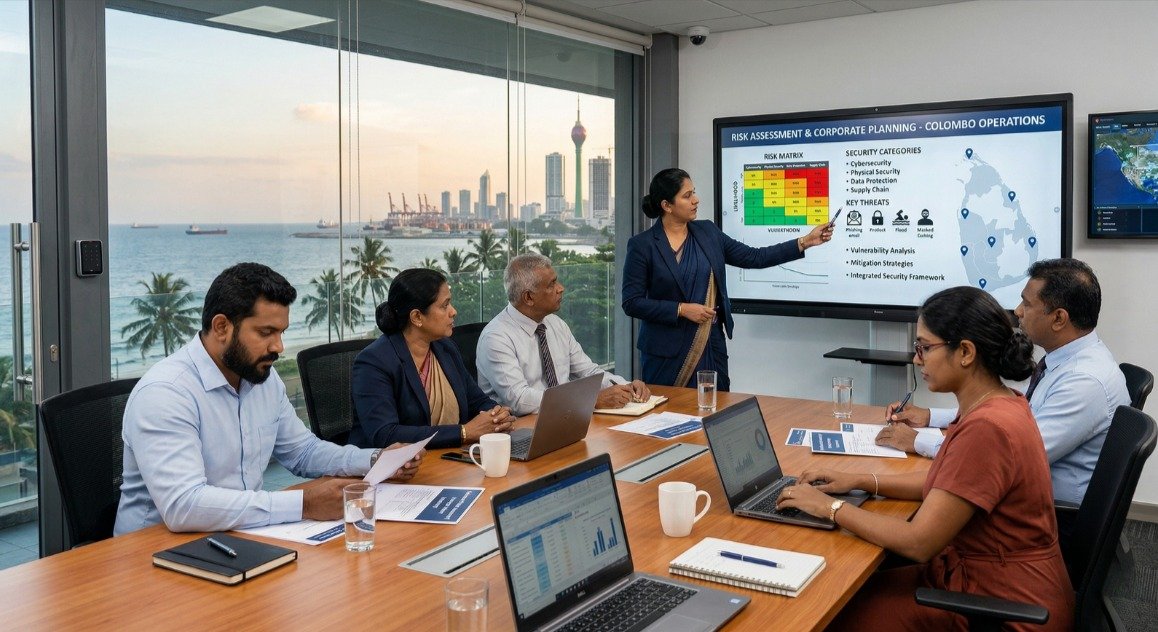
Securing your business in Sri Lanka is no longer just about locking the front door. As the world around us shifts rapidly, local enterprises are encountering a growing number of security challenges. These span from physical dangers like theft and vandalism to complex digital threats such as data breaches and cyberattacks.
Whether you manage a retail store in Colombo, a logistics facility in Katunayake, or a tech startup in Malabe, protecting your venture is absolutely vital for its survival and growth. To build a robust defense, you must start by understanding your vulnerabilities. Conducting a systematic security risk assessment is the essential first step, allowing you to identify weaknesses and take proactive measures to safeguard your assets, staff, and customer trust. Partnering with a professional provider of security services can ensure this process is handled with expert precision.
This comprehensive guide is tailored for Sri Lankan business owners, taking you through the practical process of conducting an effective security risk assessment. This journey will help you build a safer, more resilient, and ultimately more successful operation.
Understanding the Security Risk Assessment
So, what exactly is a security risk assessment? In simple terms, it’s a structured method for identifying potential threats to your business, evaluating how vulnerable you are, and putting measures in place to reduce or eliminate those risks. Think of it as a thorough checkup for your business’s safety. It helps you understand exactly where you stand and makes it much easier to decide how to smartly invest your resources for maximum protection.
For Sri Lankan businesses, common security risks include:
- Theft and burglary incidents
- Internal misconduct or theft by employees
- Cybersecurity threats and potential data breaches
- Natural disasters like significant flooding and landslides
- Disruptions stemming from political or social unrest
- Fire hazards and various workplace safety concerns
When you invest the time in a well-executed security risk assessment, you gain invaluable benefits. You can significantly reduce the potential for financial losses, avoid legal liabilities, and prevent crippling operational shutdowns. Crucially, it improves your business’s ability to recover from unexpected events and boosts confidence among everyone connected to your company, from customers and employees to investors.
Step 1: Identifying What Needs Protection
The foundational step in any security risk assessment is to clearly identify all your valuable business assets. What is it that makes your business run? These assets generally fall into three main buckets:
Physical Assets: These are your tangible properties, including your buildings and premises, equipment, machinery, inventory on hand, cash registers, company vehicles, and other physical items.
Digital Assets: This category is increasingly critical and includes sensitive customer data, financial records, proprietary software, critical trade secrets, and important confidential communications like emails.
Human Assets: This is your most valuable resource—your employees, your customers, business partners, and anyone else who interacts with your business operations.
Let’s illustrate this with an example: Imagine you own a busy supermarket in Dehiwala. Your key assets would likely include:
- Physical: The storefront itself, installed security cameras and alarm systems, cash registers, and all the stock on the shelves.
- Digital: Your online ordering system, customer databases associated with loyalty programs, and financial records.
- Human: Your cashiers, stockers, managers, security personnel, and suppliers visiting the premises.
Once you have a crystal-clear understanding of every asset that requires protection, you can confidently move on to evaluating the potential dangers.
Step 2: Spotting Potential Security Threats
The security threats facing businesses can vary significantly depending on your industry, exact location, and the size of your operations. Here’s a closer look at some of the common threats that Sri Lankan businesses frequently encounter:
Physical Threats:
- Break-ins and daytime theft are significant concerns, particularly in bustling high-traffic commercial areas.
- Acts of vandalism can cause costly damage to your property.
- Allowing unauthorized access to restricted parts of your premises can lead to theft or compromised operations.
- Sadly, issues like workplace violence or internal theft by employees are also real threats that must be considered.
Digital Threats:
- Phishing attacks, which are deceptive emails aimed at tricking staff, are a very common cyber threat.
- Data breaches can occur when sensitive information is leaked due to weak security protocols or employee error.
- Malicious software, known as malware, and ransomware can cripple your business operations by locking down your systems and data until a ransom is paid.
Environmental and External Threats:
- Sri Lanka’s climate means heavy rainfall, which frequently leads to flooding in vulnerable areas like parts of Colombo, Rathnapura, or Galle, disrupting businesses for days or weeks.
- Unreliable power can lead to outages that seriously impact your business continuity and equipment.
- Organized protests, strikes, or general political instability can unfortunately impact daily operations and logistics in the country.
By creating a comprehensive list of these potential security risks tailored to your specific context, you are effectively preparing for the next crucial step: assessing where your vulnerabilities lie.
Step 3: Evaluating Your Vulnerabilities
With your list of potential security threats in hand, the next vital task is to honestly evaluate just how vulnerable your business is to each one. This step requires a careful look inward. Ask yourself the following key questions:
- Are absolutely all points of entry to your premises including back doors, windows, and delivery areas secured with high quality locks, or better yet, integrated security systems?
- Do you have high quality surveillance cameras positioned to monitor all high risk areas, such as cash handling points, stockrooms, and blind spots?
- Is your most sensitive business data encrypted when stored and when transmitted, and is access to it strictly controlled?
- Do all your employees receive regular training on essential security practices, from spotting phishing emails to recognizing suspicious in store behavior?
- Are all emergency exits clearly marked, completely unobstructed, and easily accessible from the inside at all times?
A thorough vulnerability assessment like this helps you pinpoint precise weak areas in your current security setup that require your immediate attention and resources.
Step 4: Analyzing the Impact of Risks
It’s important to remember that not all risks are equal. You need to determine which threats pose the most significant overall risk to your business. When you analyze impact, you should carefully consider these three crucial factors:
Likelihood of Occurrence: Realistically, how often could this specific threat actually happen to my business, given my location and operation?
Severity of Impact: If this threat were to occur, how devastating would it be? Would it cause minor inconvenience, major financial loss, deep reputational damage, or even force a complete business closure?
Cost of Mitigation: How expensive or complicated is it to effectively prevent or respond to this specific risk?
For instance, a busy retail clothing store located in the Pettah market area will rightly prioritize theft prevention. In contrast, a specialized software development firm located in Colombo will likely focus its main security efforts and budget on robust cybersecurity measures to protect its intellectual property and client data.
Step 5: Implementing Robust Security Measures
After you have a clear picture of your risks, it is time to take action and implement targeted security measures to minimize them. Here are some key areas to focus on:
Physical Security Measures:
- Surveillance: Install reliable CCTV cameras to provide comprehensive monitoring of all entry points, customer-facing areas, and sensitive stock locations.
- Guards: Hire professional security personnel to maintain a physical presence and guard your premises, deterring criminal activity.
- Access Control: Use modern access control systems, such as key cards or even biometric (fingerprint or facial) scanners, to strictly restrict entry to authorized personnel only.
- Lighting: Significantly improve the lighting around your entire property, which is a simple and effective way to deter criminal activity.
Cybersecurity Measures:
- Authentication: Implement strong, unique passwords for all business accounts and enforce two-factor authentication wherever possible.
- Protection: Regularly update all your antivirus software, firewalls, and other protective digital tools to stay defended against the latest threats.
- Education: Regularly educate your employees on how to spot phishing scams and other common cybersecurity best practices.
- Encryption: Take steps to secure all customer data and financial records through encryption, making them unreadable even if they are accessed.
Workplace Safety Measures:
- Training: Conduct regular, mandatory fire drills and clear emergency evacuation training for all staff members.
- Prevention: Install and regularly test fire alarms and functional sprinkler systems.
- Standards: Ensure that all electrical wiring, connections, and equipment throughout your business are strictly up to safety standards.
The most effective security measures are always tailored to your business’s specific needs and are periodically reviewed to ensure they remain relevant and effective as the threat landscape evolves.
Step 6: Cultivating Security Awareness Through Training
Your entire security plan, no matter how sophisticated the technology, is only as strong as the people who are tasked with following it. Your employees are on the front lines and play a truly crucial role in maintaining a secure environment for everyone. Therefore, you should conduct regular, engaging training sessions for all staff on key topics, including:
- How to quickly and accurately identify suspicious behavior from customers or other visitors.
- The correct procedures to follow for immediately handling and reporting any security incidents or potential digital breaches.
- A clear and deep understanding of your company’s specific data protection policies.
- Knowing exactly what to do in various emergency situations, including evacuations and medical events.
For example, successful banks and financial institutions across Sri Lanka are diligent about this, regularly training their employees on the latest fraud detection techniques and data security protocols.
Step 7: Ongoing Monitoring and Review of Security Measures
It’s absolutely essential to view security not as a one-time task that you can cross off your list, but as an dynamic, ongoing process. The threats you face will evolve, and your security must keep pace. To stay ahead of potential dangers, you should:
- Perform detailed monthly security audits of your physical premises and digital systems to check for new weaknesses.
- Consistently analyze CCTV footage to identify any unusual or suspicious patterns of activity that might warrant investigation.
- Conduct regular penetration tests, which are simulated cyberattacks designed to safely evaluate the strength of your cybersecurity defenses.
- Create a culture where employees feel comfortable and are actively encouraged to provide regular feedback on any security concerns they notice.
Given the complexity, many successful businesses in Sri Lanka choose to partner with professional security consultants. These experts can provide deep expertise for risk assessments and help you with the development of a long-term, comprehensive security strategy.
Conclusion: Taking Proactive Action Today
In conclusion, conducting a thorough security risk assessment is not just a good idea; it’s an absolute essential for Sri Lankan businesses looking to protect their valuable assets, dedicated employees, and hard-earned reputation. By carefully following the step-by-step guidelines we’ve outlined here, you can proactively identify your unique risks, implement strong and targeted security measures, and create a far safer, more stable working environment.
The reality is that security threats will always exist in some form, but when you have a well-planned, proactive risk assessment in place, you can dramatically reduce their potential impact on your business. This is about building resilience. Don’t wait for an unfortunate incident to happen to your business take decisive action today to safeguard your operations, your people, and your future against potential risks. It is a critical investment in your long-term success.